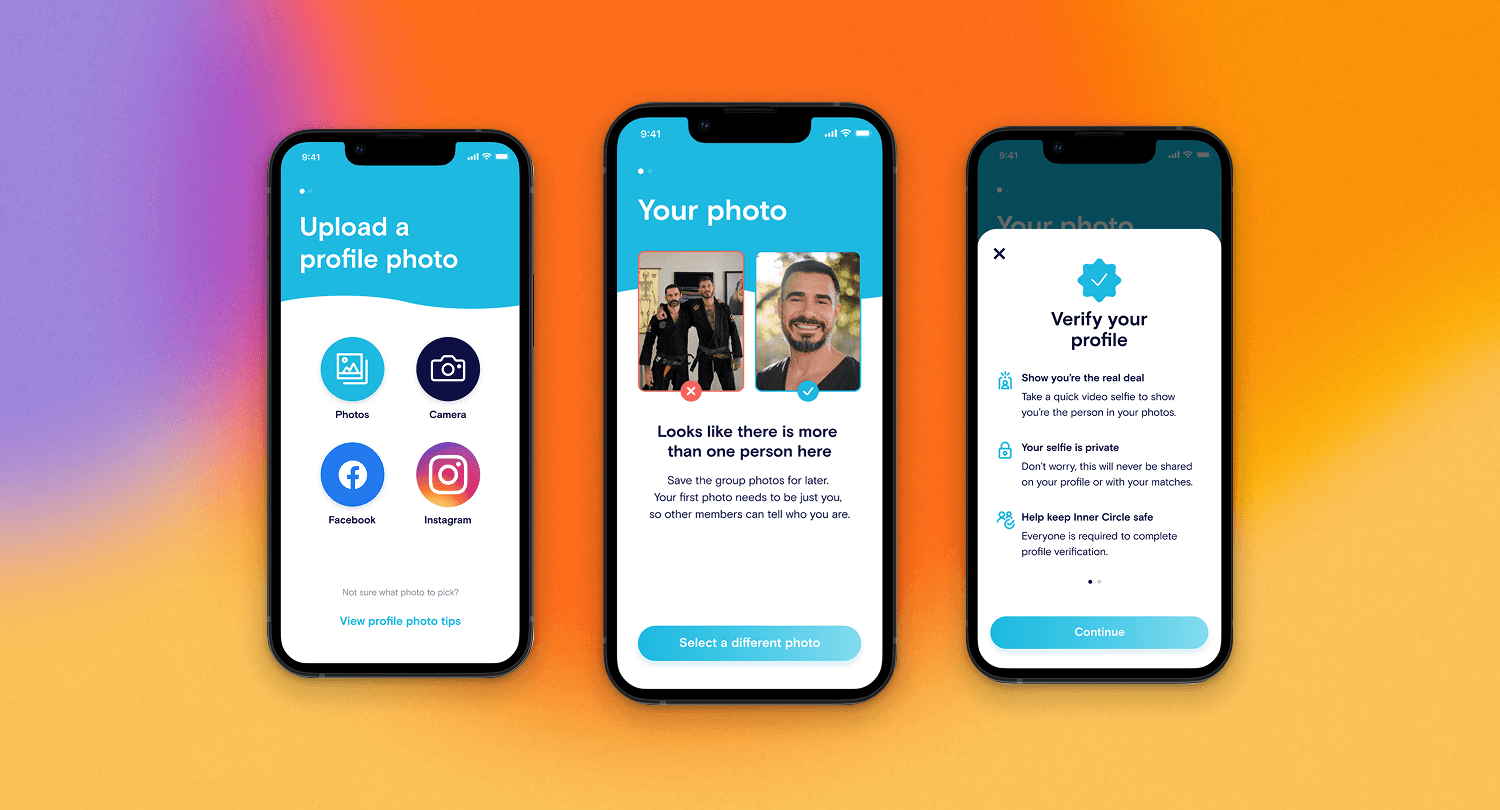
Transforming onboarding through behavioural insight

Optimising the registration & onboarding experience of a dating app.
Dashboard Sidebar Close Up

Client

Inner Circle - 2021/2022

Inner Circle - 2021/2022

Sector

Consumer app - Dating

Consumer app - Dating

Role

Product Designer, responsible for end-to-end design. funnel analysis, user testing, hypothesis development, and iterative A/B testing. Collaborated with product, data, and engineering throughout the process.

Product Designer, responsible for end-to-end design. funnel analysis, user testing, hypothesis development, and iterative A/B testing. Collaborated with product, data, and engineering throughout the process.

The TLDR

Inner Circle's gated registration process maintained community quality but created a growth bottleneck. only 62.5% of users completed registration. With Q1 targets set for new approved members, I needed to remove friction in the flow while maintaining our trust and safety standards. Funnel analysis revealed the biggest drop-offs at photo upload and face verification.

The challenge:
Balance competing priorities: improve registration completion to hit growth targets while preserving the quality standards that defined our brand. My initial hypothesis; that users didn't know what photos to upload or found verification unclear needed validation before committing to a full redesign.

The outcome:
After three A/B tests showed only minimal improvement, I made the strategic decision to invest two weeks in qualitative research rather than continue incremental testing. This revealed where the real problems were, and allowed us to make impactful changes that

  • Reduced cognitive load on users during key stages in the funnel

  • Increased registration completion by 8% (62.5% → 70.5%), contributing to 15% month-over-month growth in approved members

  • Established business value of qualitative research across the company, shaping future onboarding strategy

  • Two weeks of research prevented months of incremental A/B tests addressing symptoms rather than root causes
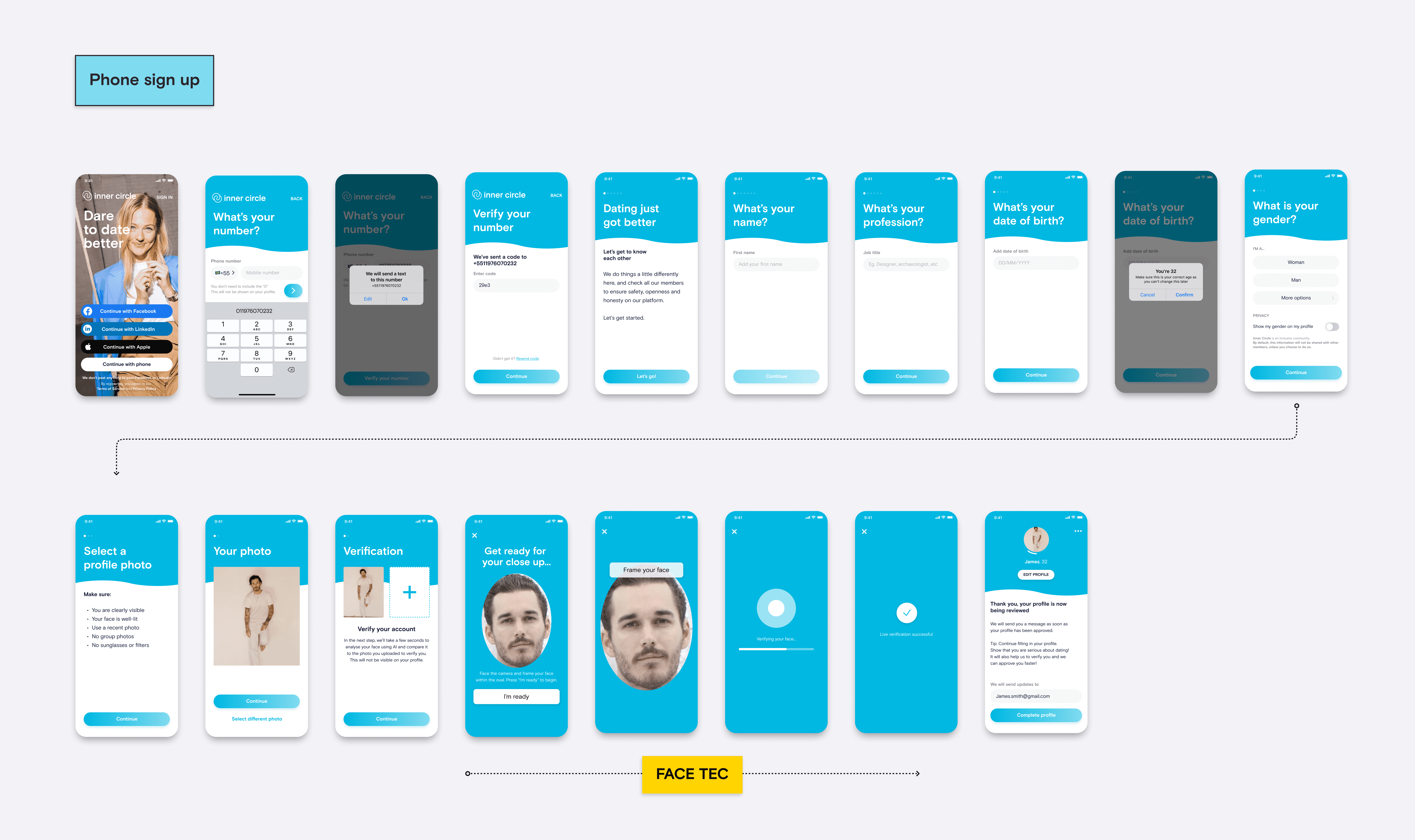
Existing registration flow for mobile phone (before changes)

Background —

Inner Circle is a global, application-only dating app designed for ambitious singles in major cities. To maintain a high-quality and safe community, every user must complete registration and pass review before joining. This approach ensures members are genuine with clear dating intentions, but it also meant friction in the registration flow directly impacted our ability to hit growth targets.

Inner Circle is a global, application-only dating app designed for ambitious singles in major cities. To maintain a high-quality and safe community, every user must complete registration and pass review before joining. This approach ensures members are genuine with clear dating intentions, but it also meant friction in the registration flow directly impacted our ability to hit growth targets.

Challenge —

In Q1 2022, with ambitious targets set for new approved members (NAM),
my challenge was to identify and remove friction points in the registration flow, improving the registration completion rate without compromising the quality and safety standards that defined our brand.

In Q1 2022, with ambitious targets set for new approved members (NAM),
my challenge was to identify and remove friction points in the registration flow, improving the registration completion rate without compromising the quality and safety standards that defined our brand.

Approach —

I started by mapping all sign-up methods (Apple, Facebook, LinkedIn, Phone) and worked with our data team to integrate event tracking into Amplitude for funnel analysis. I also talked to the screening team to understand common application issues.

My initial hypothesis was that users didn't know what type of photos to upload, didn't have good options on hand, and found face verification unclear.

I ran three A/B tests; but saw only minimal improvements.

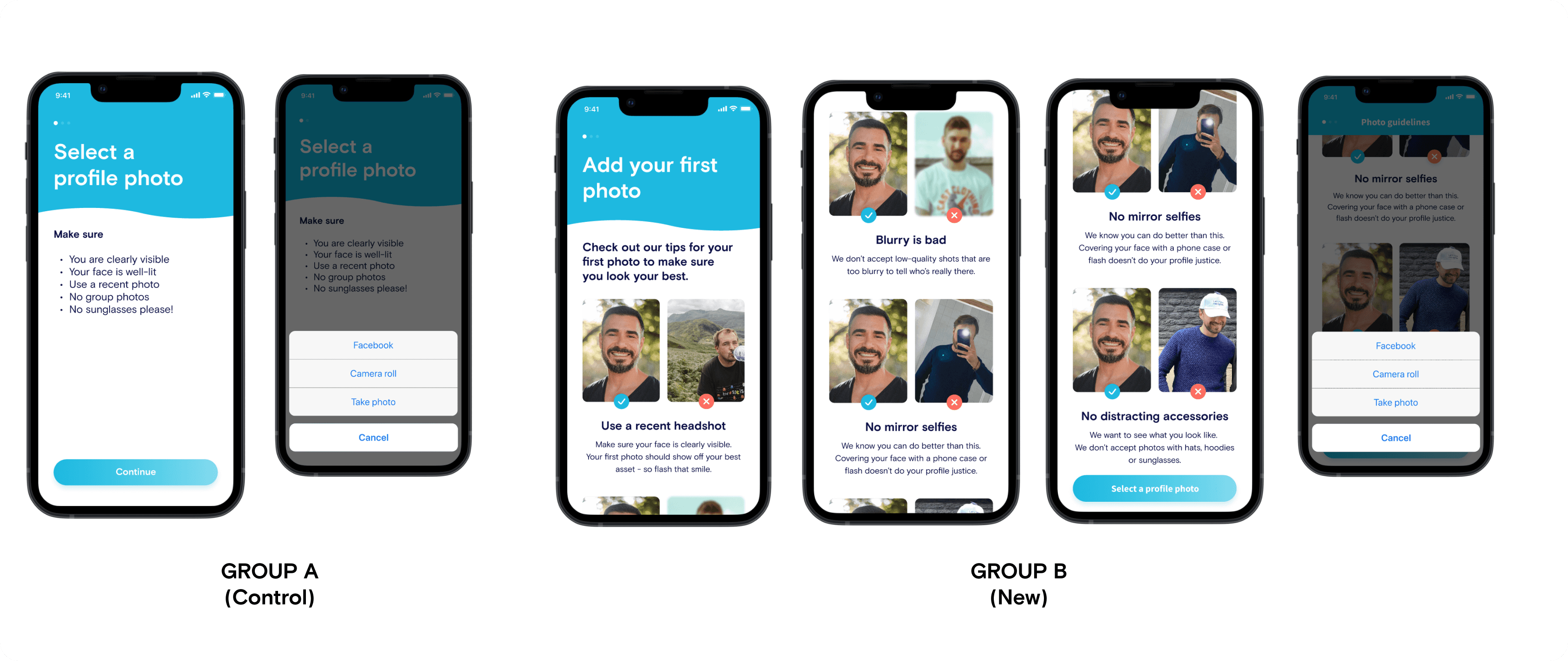
  • Visual photo guides

  • Instagram as a photo source

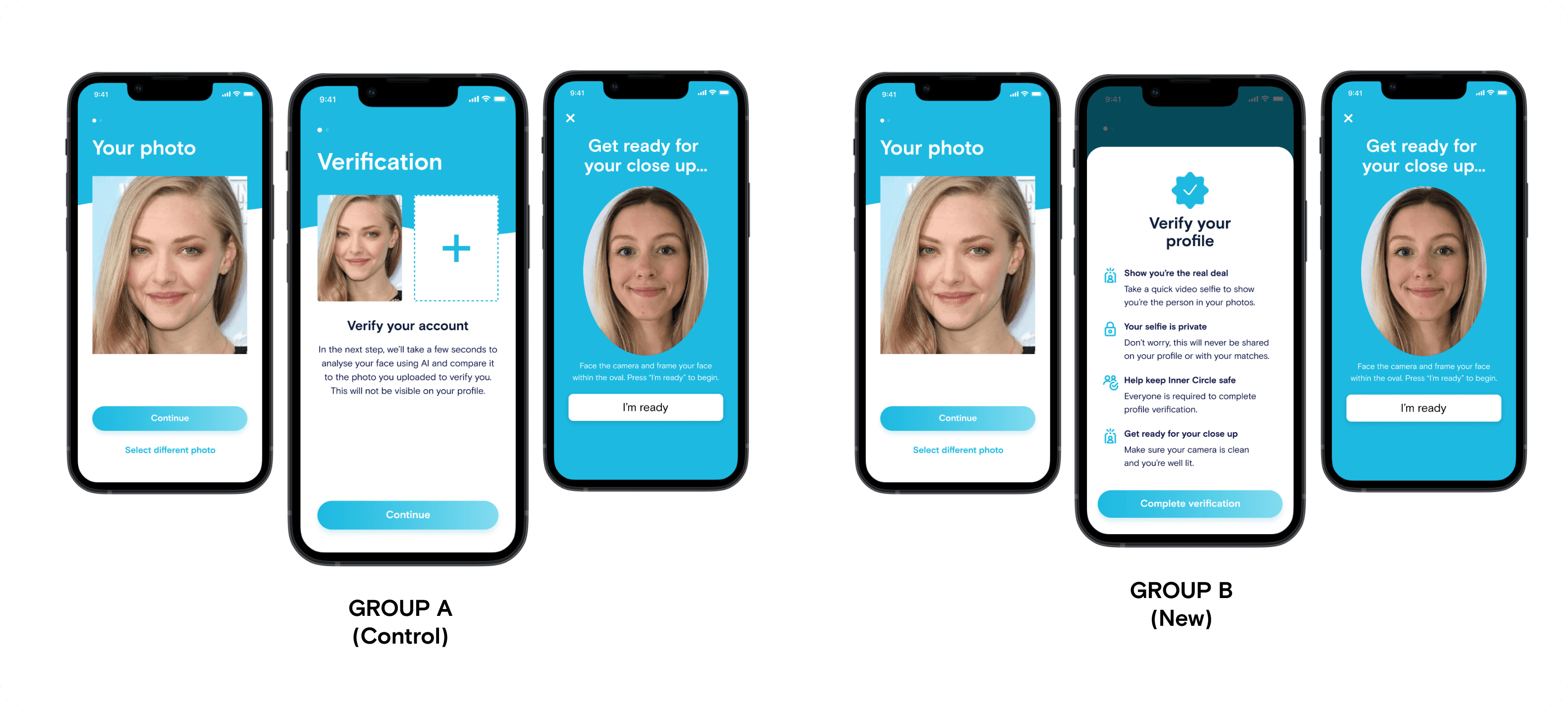
  • updated verification copy

I started by mapping all sign-up methods (Apple, Facebook, LinkedIn, Phone) and worked with our data team to integrate event tracking into Amplitude for funnel analysis. I also talked to the screening team to understand common application issues.

My initial hypothesis was that users didn't know what type of photos to upload, didn't have good options on hand, and found face verification unclear.

I ran three A/B tests; but saw only minimal improvements.

  • Visual photo guides

  • Instagram as a photo source

  • updated verification copy

Isometric Illustration Wifi

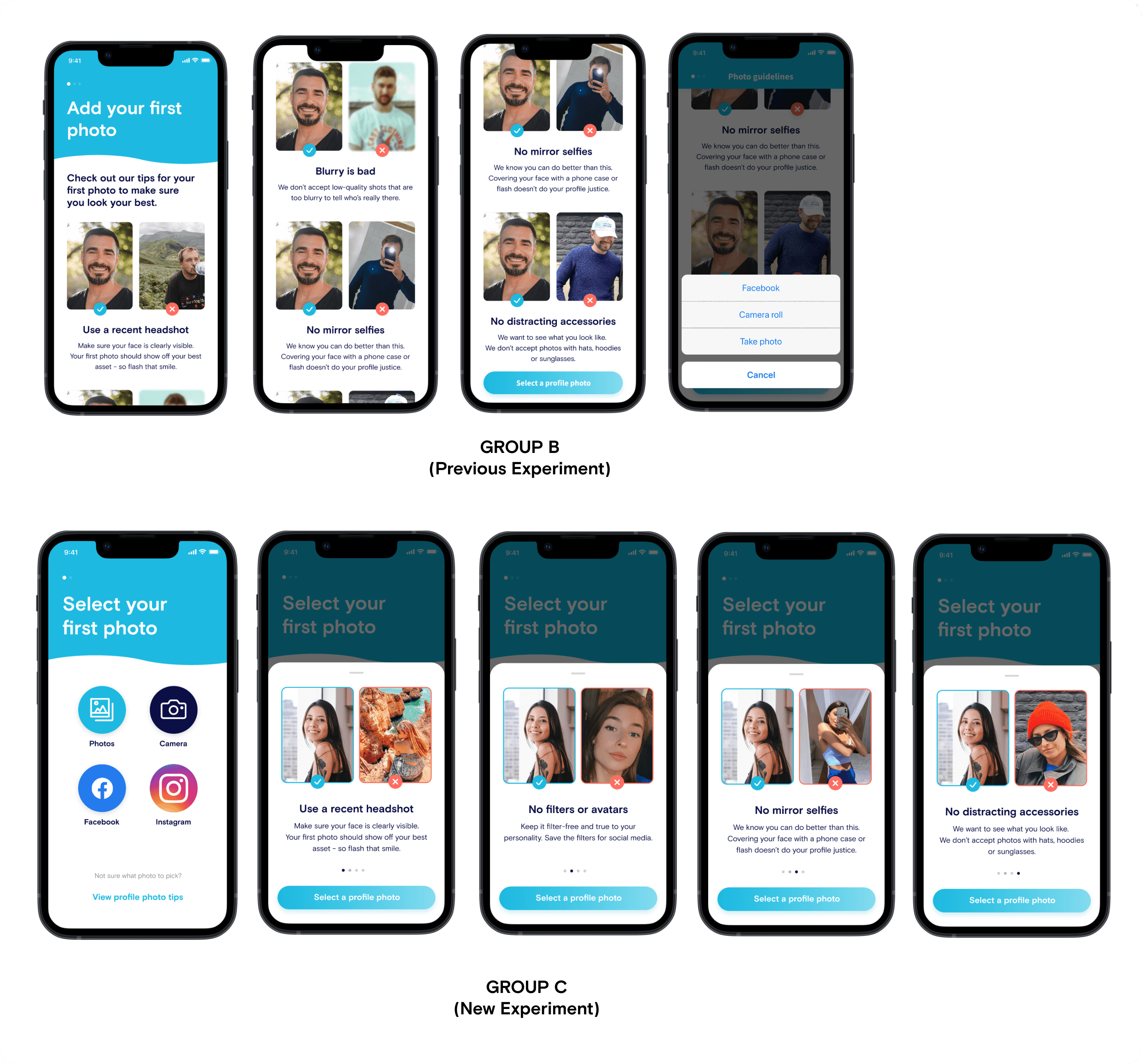
Some of the initial AB tests: AB test #1: Existing upload options - (Group A) VS Visual photo guide - (Group B) AB test #3: Existing face verification intro screen - (Group A) VS Detailed face verification tips - (Group B)

Results —
After only seeing minimal improvements with the initial AB tests, I made the decision to conduct in-person user testing rather than continuing with incremental tests.

This revealed the real issue: Photo selection created cognitive load during what should be a casual sign-up experience.

Users were skimming the instructions, tapping, and making split-second decisions, and the face verification tool was hyper sensitive comparing uploaded photo to live photo. Based on these insights, I redesigned the flow around one principle: one clear goal per step, with optional details for those who need them.

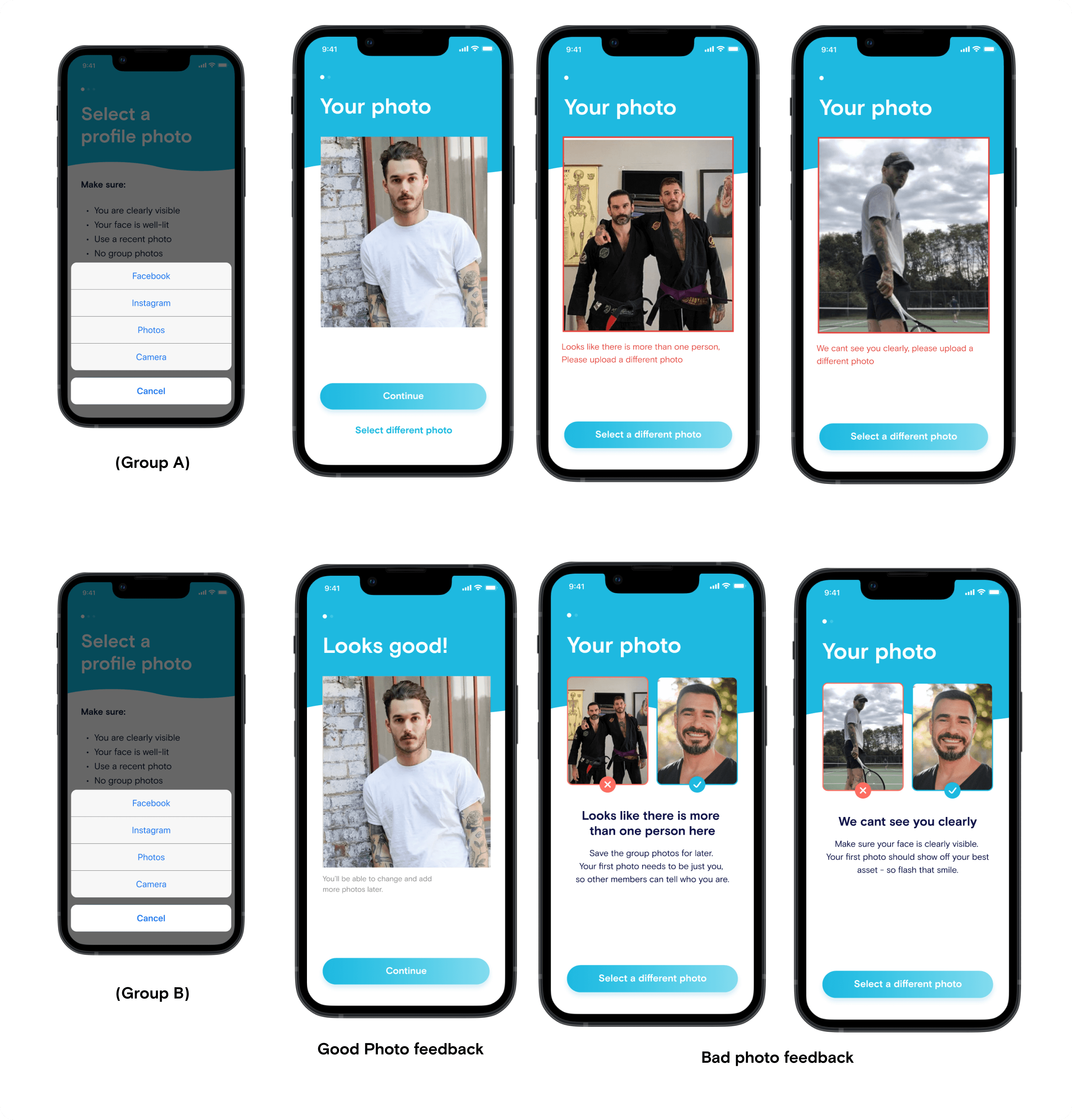
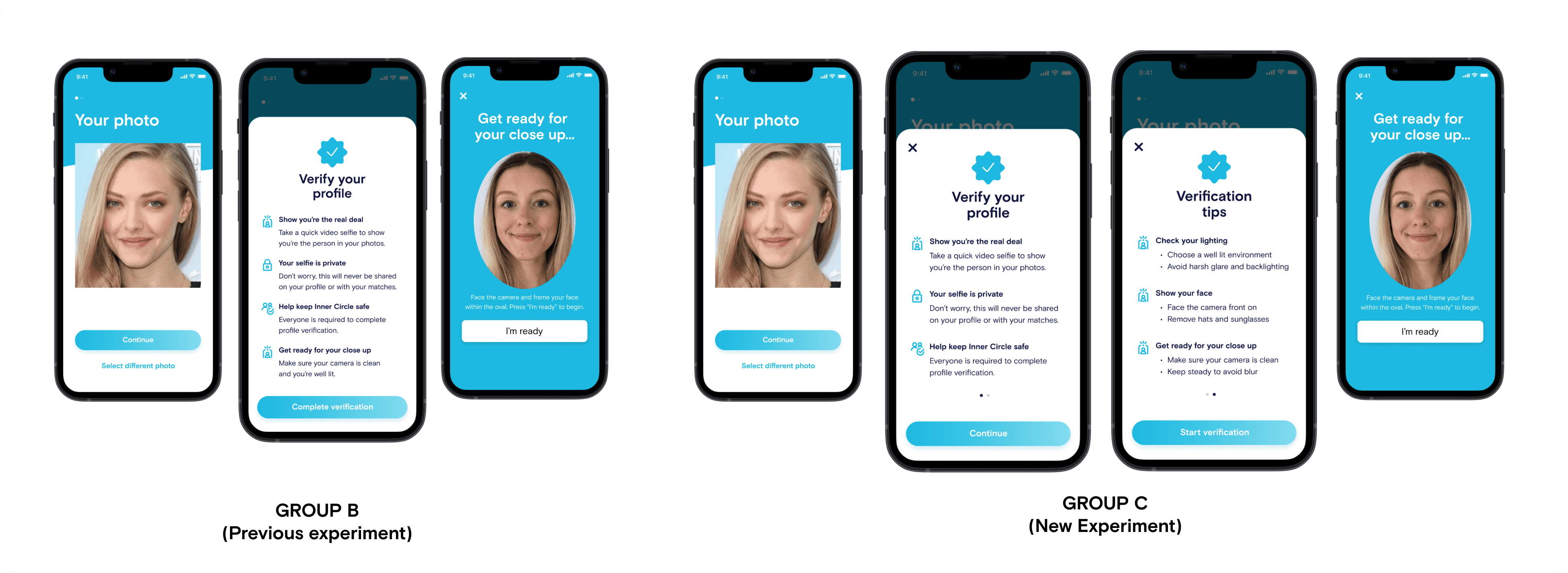
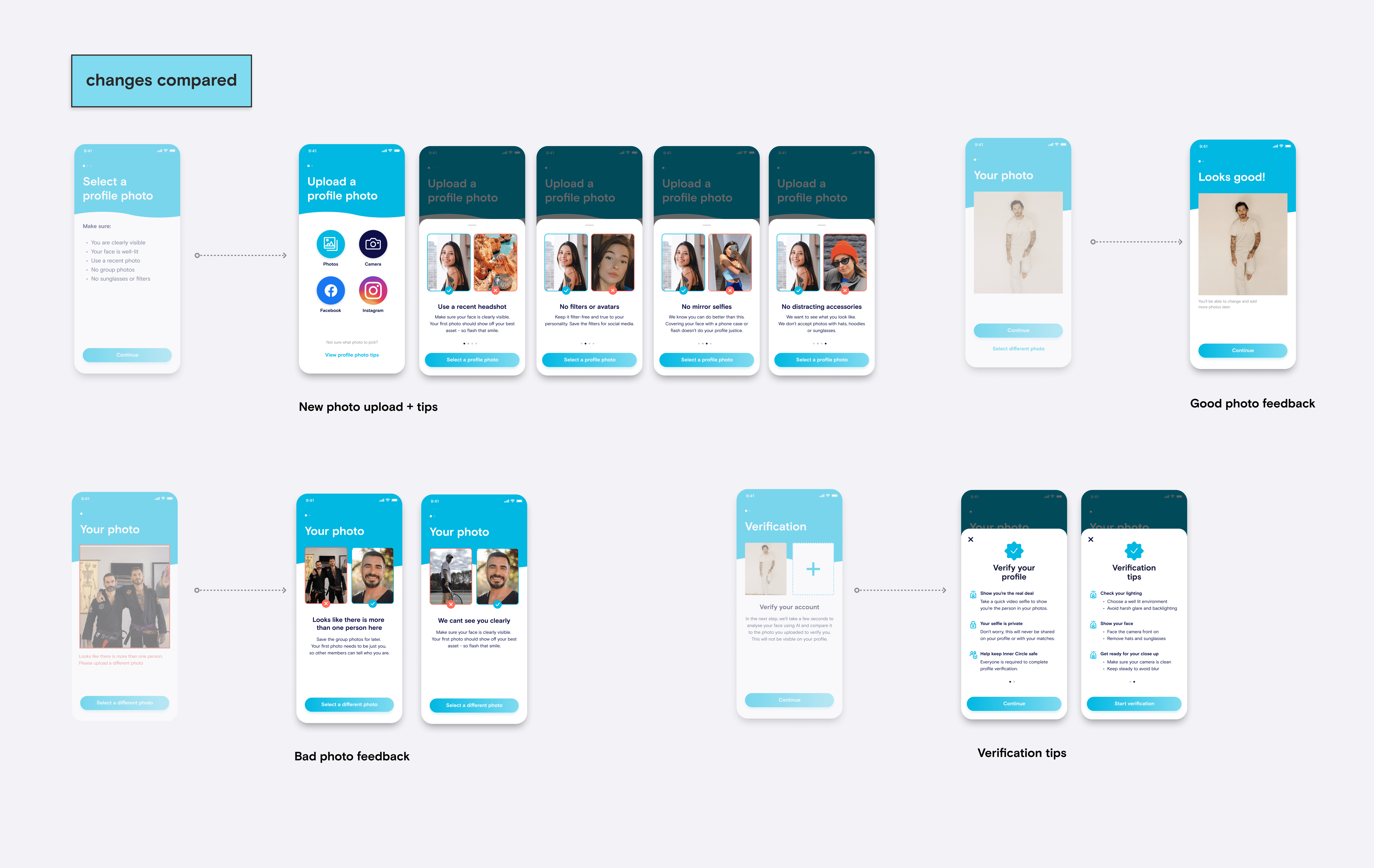
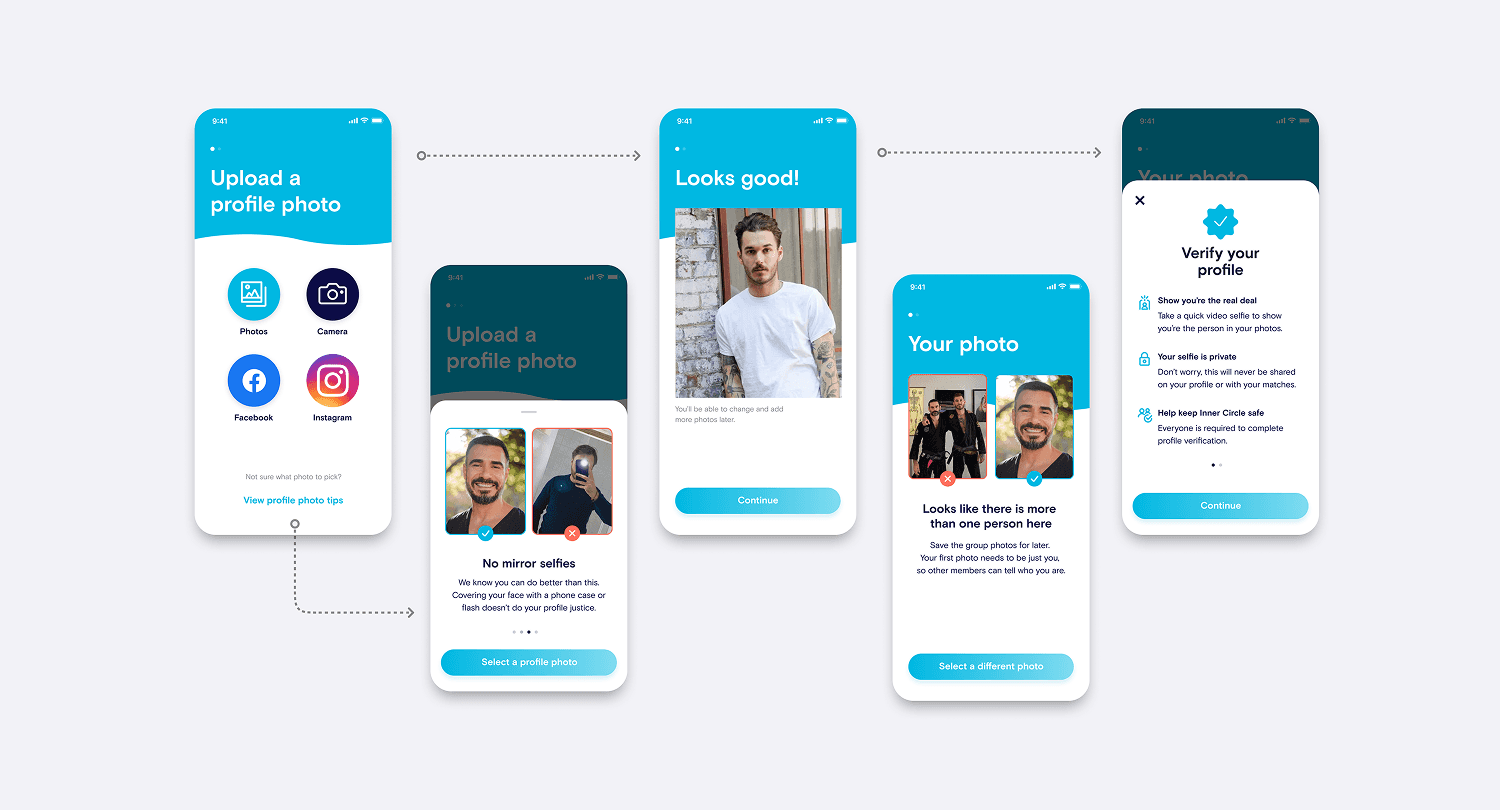
I simplified photo upload (reduced by one screen), separated photo tips into an optional context menu, added immediate visual feedback on uploaded photos with specific rejection guidance, and split pre-verification tips into two screens using progressive disclosure.

After only seeing minimal improvements with the initial AB tests, I made the decision to conduct in-person user testing rather than continuing with incremental tests.

This revealed the real issue: Photo selection created cognitive load during what should be a casual sign-up experience.

Users were skimming the instructions, tapping, and making split-second decisions, and the face verification tool was hyper sensitive comparing uploaded photo to live photo. Based on these insights, I redesigned the flow around one principle: one clear goal per step, with optional details for those who need them.

I simplified photo upload (reduced by one screen), separated photo tips into an optional context menu, added immediate visual feedback on uploaded photos with specific rejection guidance, and split pre-verification tips into two screens using progressive disclosure.

Some of the follow up AB tests: B test #2: Optional photo tips (if female gender is selected) - (Group C) AB test #3: New uploaded photo screen, with good and bad examples - (Group B) AB test #4: New pre-verification photo screen, with additional tips on taking the photo - (Group C)

Outcome —
The redesigned flow increased registration completion from 62.5% to 70.5% - an 8% lift. This contributed to 15% month-over-month growth in new approved members, helping the company hit Q1 growth targets.

Beyond the metrics, this project established the business value of qualitative research across the company and shaped future onboarding strategy.

It also sparked a company-wide conversation about what "quality profiles" actually means (beyond just photos and verification), leading to a dedicated initiative in Q2 where we shifted growth marketing efforts toward quality users instead of just getting anyone in the door.

The redesigned flow increased registration completion from 62.5% to 70.5% - an 8% lift. This contributed to 15% month-over-month growth in new approved members, helping the company hit Q1 growth targets.

Beyond the metrics, this project established the business value of qualitative research across the company and shaped future onboarding strategy.

It also sparked a company-wide conversation about what "quality profiles" actually means (beyond just photos and verification), leading to a dedicated initiative in Q2 where we shifted growth marketing efforts toward quality users instead of just getting anyone in the door.

Final comparison of screens that contributed to the 8% increase in registration completion: Existing screens - (left) vs new screens - (right)

Takeaway —

Analytics showed where users dropped off, but only observation revealed why.
For complex decision-making processes like photo selection and identity verification, seeing the "3D picture" through usability testing was invaluable. Taking two extra weeks for in-person testing saved development time by focusing on two big bets instead of endless small tests.

Analytics showed where users dropped off, but only observation revealed why.
For complex decision-making processes like photo selection and identity verification, seeing the "3D picture" through usability testing was invaluable. Taking two extra weeks for in-person testing saved development time by focusing on two big bets instead of endless small tests.

Get in touch

I'm currently available from January 2026, for full-time or Freelance projects in Amsterdam or remote, and open to relocation within the EU or UK.

Billie Gray - 2026

Amsterdam, NL

Get in touch

I'm currently available from January 2026, for full-time or Freelance projects in Amsterdam or remote, and open to relocation within the EU or UK.

Billie Gray - 2026

Amsterdam, NL

Get in touch

I'm currently available from January 2026, for full-time or Freelance projects in Amsterdam or remote, and open to relocation within the EU or UK.

Billie Gray - 2026

Amsterdam, NL