Validating a bold new product direction

Shaping Inner Circle’s 2024 roadmap, and matchmaking strategy.

Dashboard Sidebar Close Up

Client

Inner Circle (2023-2024)

Sector

Consumer app - Dating

Role

Product Design Lead: led sprint facilitation, stakeholder alignment, pre-sprint research, prototyping, user testing, and strategic recommendations. Worked with cross-functional team including Marketing, Engineering, Data, and Research.

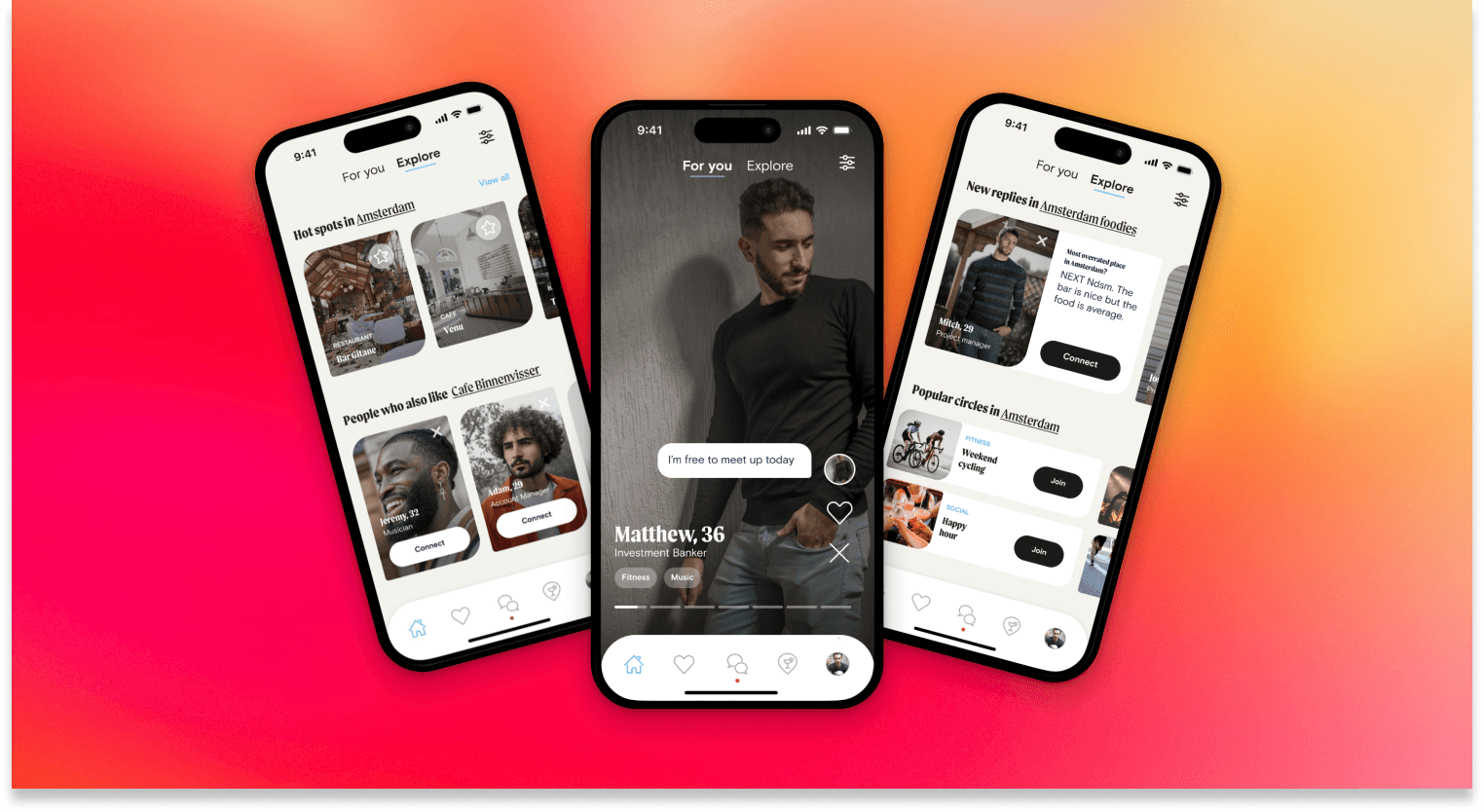
Post-pandemic dating app fatigue was causing industry-wide decline. I led a modified design sprint to align the team around a shared goal, and validate a bold new vision: connecting members through shared lifestyle communities. Resulting in 40% adoption from existing MAU after 6 months.

Preferred concept
Preferred concept
Preferred concept

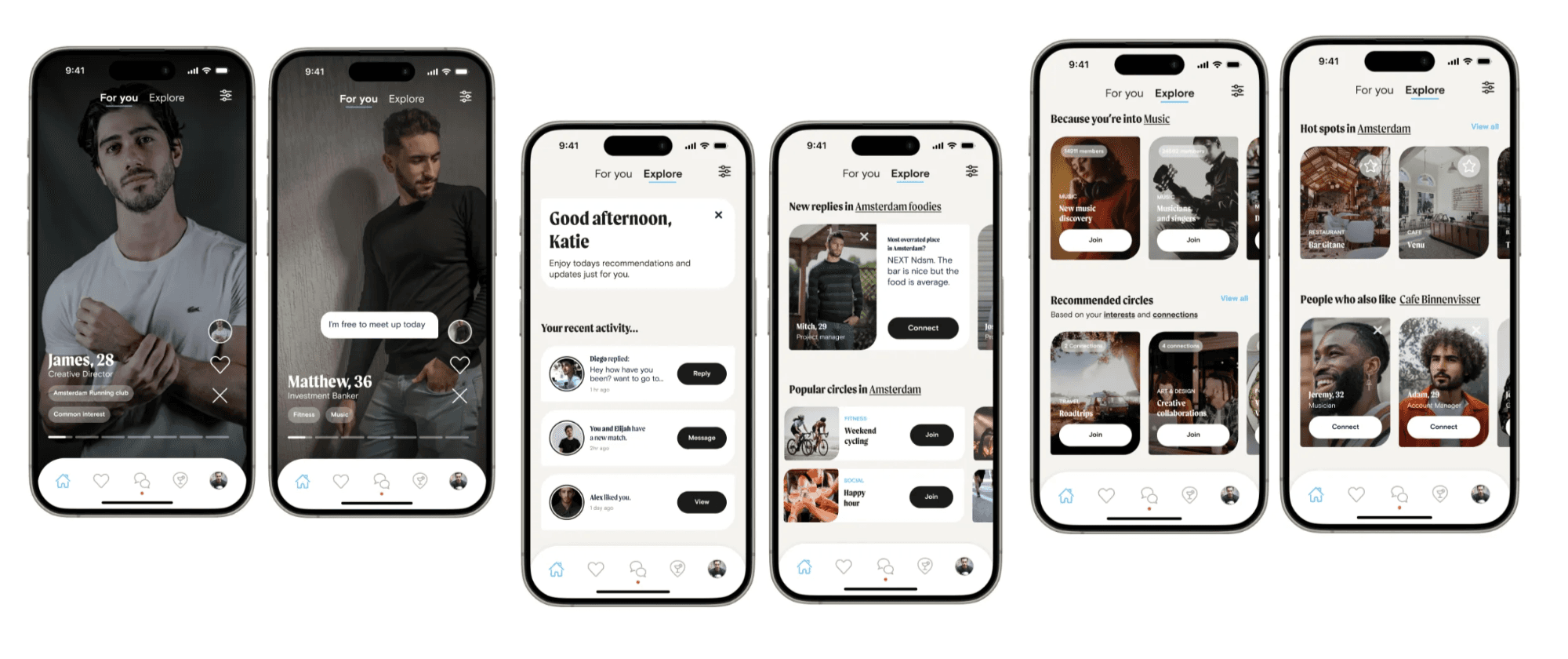
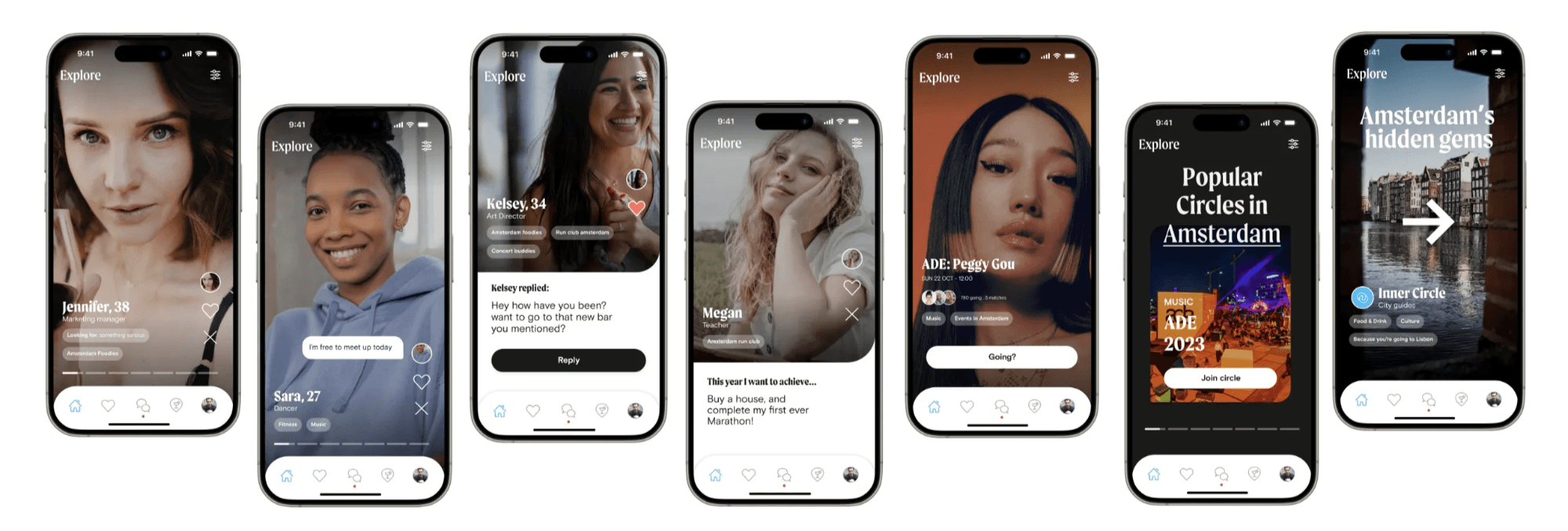
Preferred concept : Matching and content separated focusing on full screen imagery and compatible details . and connecting via recommended communities (6/11)

Background —

Inner Circle is a global dating app for ambitious singles. By mid-2023, the online dating industry was seeing general decline as users experienced app fatigue and craved in-person connections.

With a vague new strategic direction: "To become the Soho House of dating" connecting members through shared lifestyles, different teams had different interpretations of what this meant.

Leadership wanted a "more than dating" product. Marketing was focused on content. Engineering prioritized performance. We needed alignment before committing significant development resources. The risk: building the wrong thing could waste months of development.

Inner Circle is a global dating app for ambitious singles. By mid-2023, the online dating industry was seeing general decline as users experienced app fatigue and craved in-person connections.

With a vague new strategic direction: "To become the Soho House of dating" connecting members through shared lifestyles, different teams had different interpretations of what this meant.

Leadership wanted a "more than dating" product. Marketing was focused on content. Engineering prioritized performance. We needed alignment before committing significant development resources. The risk: building the wrong thing could waste months of development.

Challenge —

My challenge was to align a cross-functional team around this new strategic vision, test a pre-existing hypothesis about lifestyle communities and UGC,
and design a new MVP concept for Inner Circle 5.0, all while balancing innovation with the realities of a 10-year-old product and 7M user base.

My challenge was to align a cross-functional team around this new strategic vision, test a pre-existing hypothesis about lifestyle communities and UGC,
and design a new MVP concept for Inner Circle 5.0, all while balancing innovation with the realities of a 10-year-old product and 7M user base.

Approach —

Instead of jumping into solution mode, I proposed a modified design sprint to align the team and validate the vision before committing resources.

Before the sprint, I ran a quantitative survey across our user base and facilitated internal workshops to align on the difference between lifestyles, interests, and values; this distinction would shape how we built features.

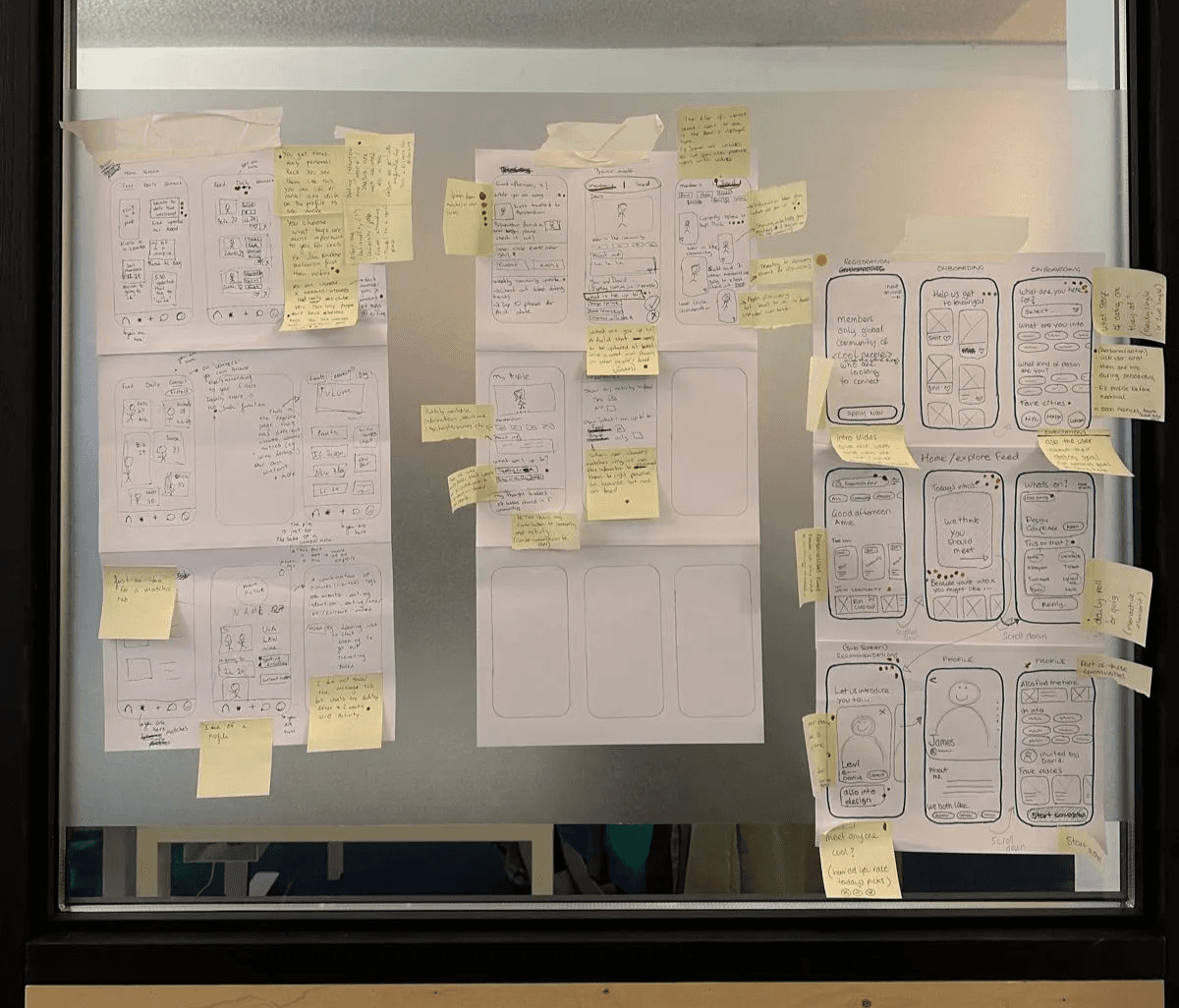
During the sprint, together with the team, I mapped the user journey, refined our hypothesis ("How might we help ambitious singles connect through shared lifestyles?"), ran structured ideation and voted on a direction:


A community-based dating experience
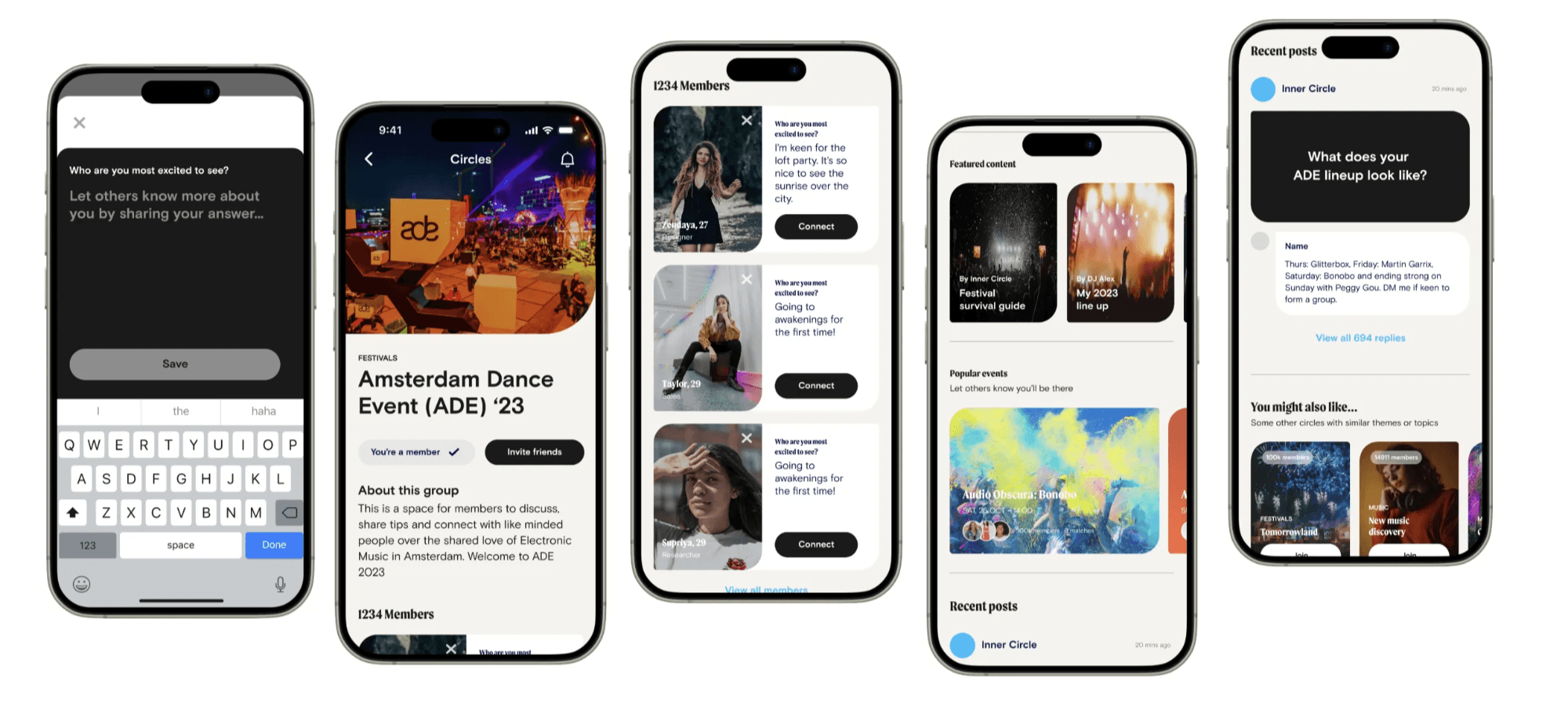
where users could join curated lifestyle groups; like "Amsterdam Runners" or "São Paulo Foodies"; and connect through events and user-generated content.

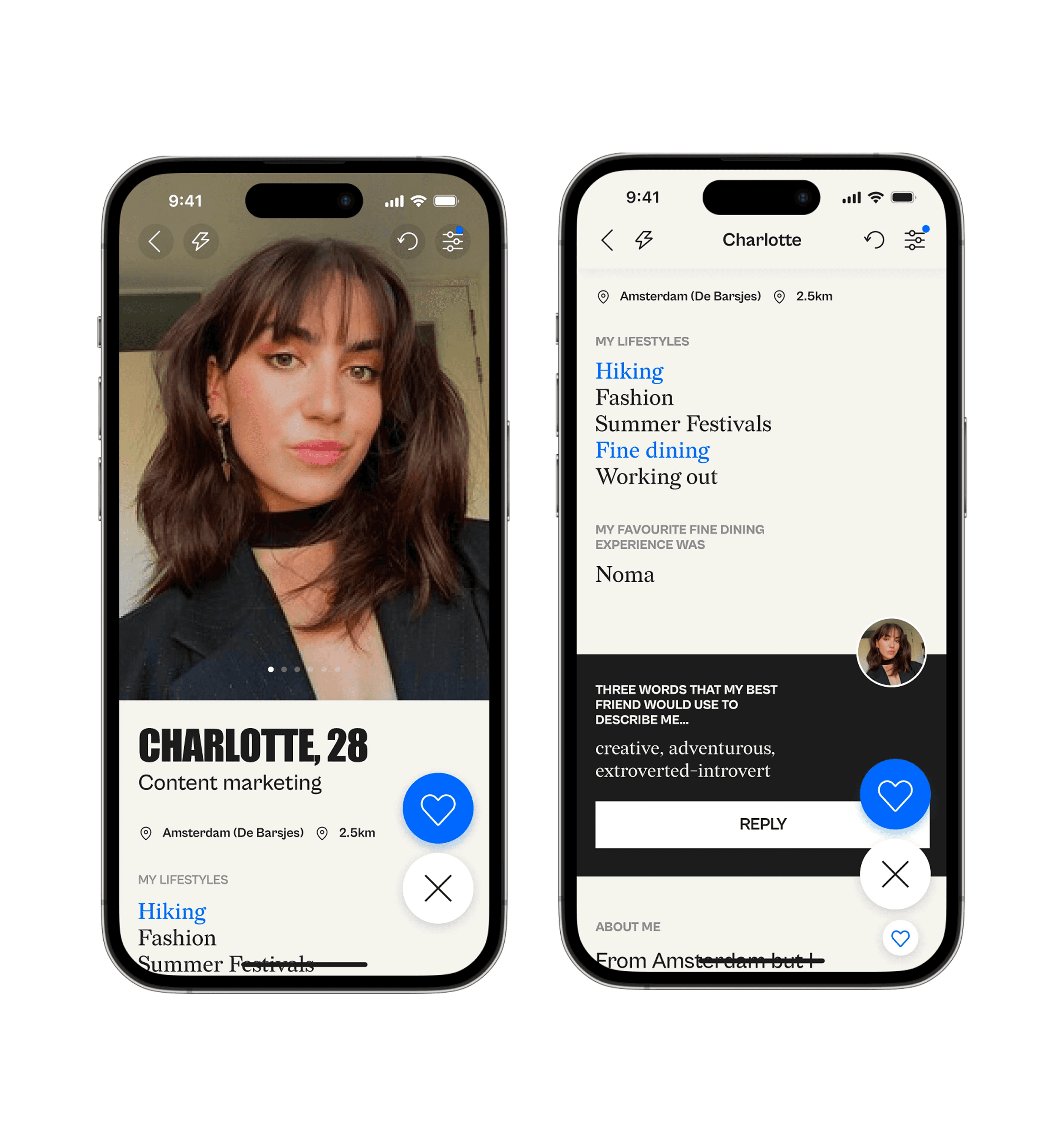
The aim: shift focus from superficial swiping to shared lifestyles and deeper connection. Alongside this: A redesigned matching experience, surfacing recommended profiles based on lifestyle compatibility rather than just looks.

I built 3 interactive prototypes and tested with 11 users across different genders, cities, and relationship intentions.

Instead of jumping into solution mode, I proposed a modified design sprint to align the team and validate the vision before committing resources.

Before the sprint, I ran a quantitative survey across our user base and facilitated internal workshops to align on the difference between lifestyles, interests, and values; this distinction would shape how we built features.

During the sprint, together with the team, I mapped the user journey, refined our hypothesis ("How might we help ambitious singles connect through shared lifestyles?"), ran structured ideation and voted on a direction:


A community-based dating experience
where users could join curated lifestyle groups; like "Amsterdam Runners" or "São Paulo Foodies"; and connect through events and user-generated content.

The aim: shift focus from superficial swiping to shared lifestyles and deeper connection. Alongside this: A redesigned matching experience, surfacing recommended profiles based on lifestyle compatibility rather than just looks.

I built 3 interactive prototypes and tested with 11 users across different genders, cities, and relationship intentions.

Full Dashboard
Full Dashboard
Full Dashboard

Results —

What we tested: 3 layout concepts with 11 users, representing a mix of genders, cities, and relationship intentions.

Our goal: Validate the desirability and usability of lifestyle-based communities, content feeds, and compatibility-driven profile discovery.

Area tested

What we wanted to learn

What we found

Lifestyle
-based communities

Would users want to join “circles” (e.g., Runners, Foodies)?

Interest was passive; didn't get the relevance for a dating context. “like another social app” why would I use it?

Community
content integration

Does blended content + profile’s increase appeal?

Felt confusing; users preferred clear separation of dating vs. community browsing

Matching vs. explore discovery modes

Would users use both pathways (lifestyle + profile-first)?

Preferred matching-first; explore seen as optional context, not a core mode

Willingness to contribute (content/
posts)

Would users participate in lifestyle-based prompts or questions?

But forced contribution felt inauthentic. Concerns about safety around real time posting of what someone is doing.

Local vs global community interest

Did users care more about local relevance or global group themes?

Local communities (e.g. “Amsterdam runners”) had more appeal than global (online connection)


The testing revealed a critical insight:
lifestyle-based connection resonated strongly, but forced communities didn't align with dating goals
.

What we tested: 3 layout concepts with 11 users, representing a mix of genders, cities, and relationship intentions.

Our goal: Validate the desirability and usability of lifestyle-based communities, content feeds, and compatibility-driven profile discovery.

Area tested

What we wanted to learn

What we found

Lifestyle
-based communities

Would users want to join “circles” (e.g., Runners, Foodies)?

Interest was passive; didn't get the relevance for a dating context. “like another social app” why would I use it?

Community
content integration

Does blended content + profile’s increase appeal?

Felt confusing; users preferred clear separation of dating vs. community browsing

Matching vs. explore discovery modes

Would users use both pathways (lifestyle + profile-first)?

Preferred matching-first; explore seen as optional context, not a core mode

Willingness to contribute (content/
posts)

Would users participate in lifestyle-based prompts or questions?

But forced contribution felt inauthentic. Concerns about safety around real time posting of what someone is doing.

Local vs global community interest

Did users care more about local relevance or global group themes?

Local communities (e.g. “Amsterdam runners”) had more appeal than global (online connection)


The testing revealed a critical insight:
lifestyle-based connection resonated strongly, but forced communities didn't align with dating goals
.

New design tokens
New design tokens
New design tokens
New design tokens
New design tokens
New design tokens
Chosen concept
Chosen concept
Chosen concept
New design tokens
New design tokens
New design tokens

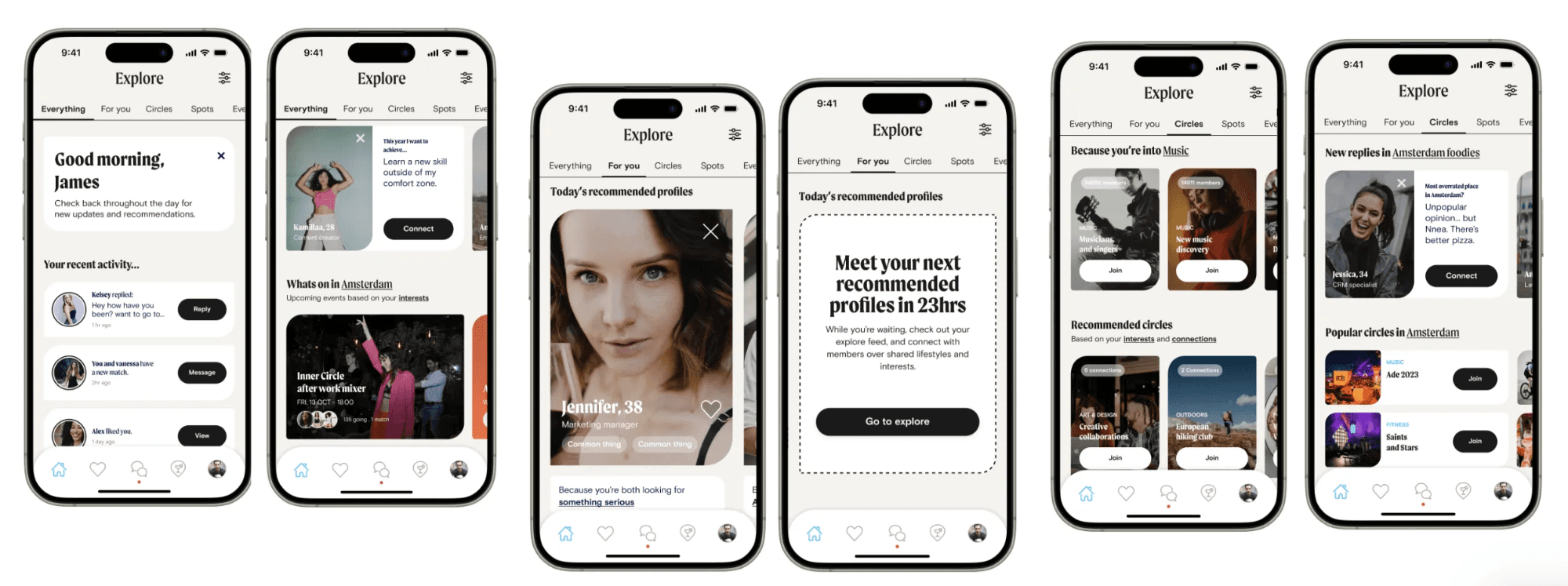
Concepts we tested: Concept 1: Tabbed browsing. Emphasis on Exploring content / community discovery based matching (3/11) Concept 2: Content, community and profiles blended together in one feed (2/11) Concept 3: Matching vs explore as two separate modes (6/11) Initial concept for “circles” where an answer and engagement is required to join and interact with other members.

Outcome —
Despite the "circles" approach not resonating, the lifestyle framing opened up promising directions: recommendations based on shared lifestyles, enriched profiles with lifestyle content, and lifestyles as a "discovery" angle.

The sprint created alignment and directly shaped the 2024 roadmap: defined what lifestyles meant for users, and created direction for capturing lifestyles and connecting members

  • Enriched profiles with lifestyle content,

  • Laid the foundation for a the app rebrand,

  • Refined matchmaking algorithms using lifestyle as a filtering layer.

    Six months after launch:

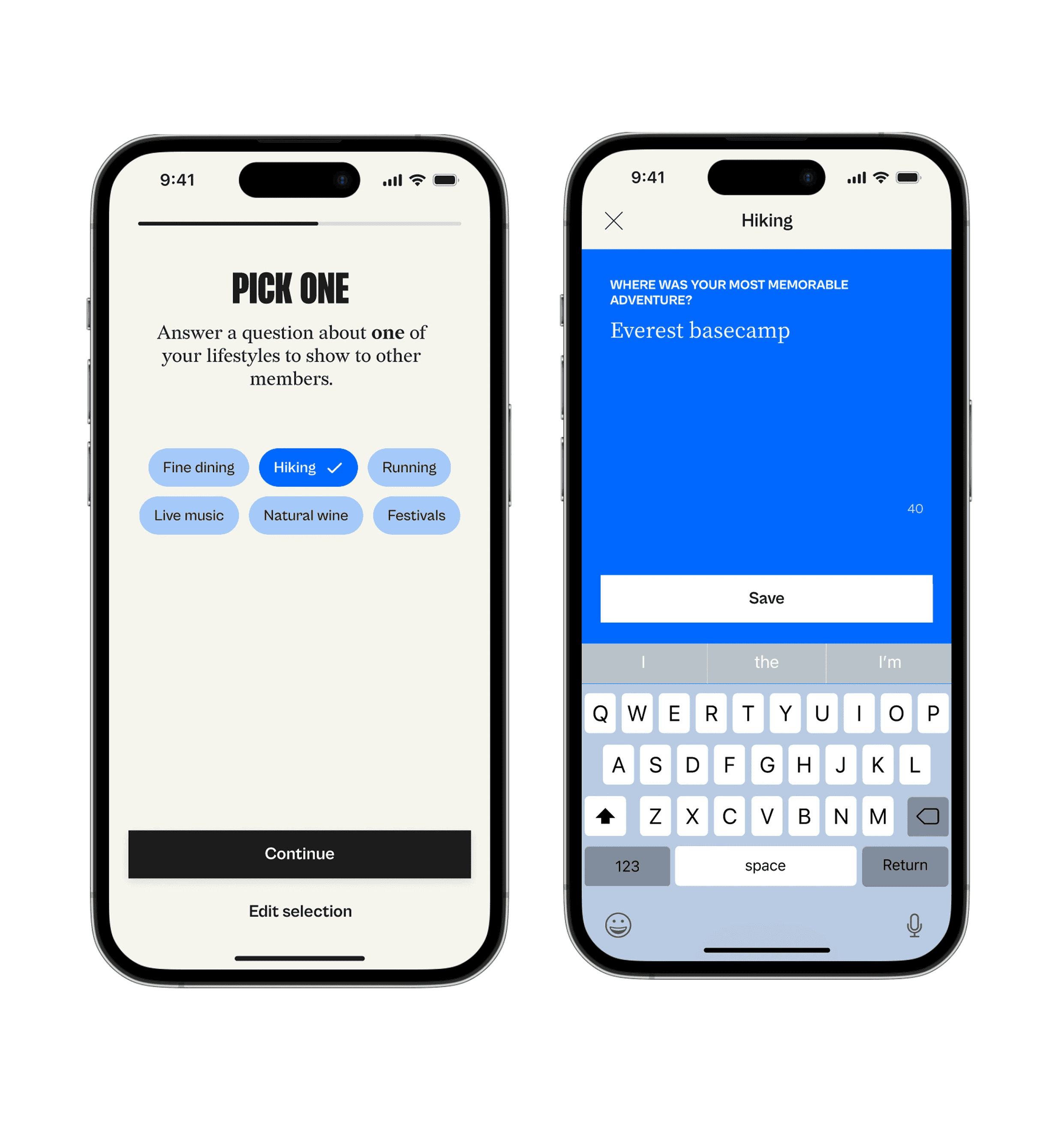
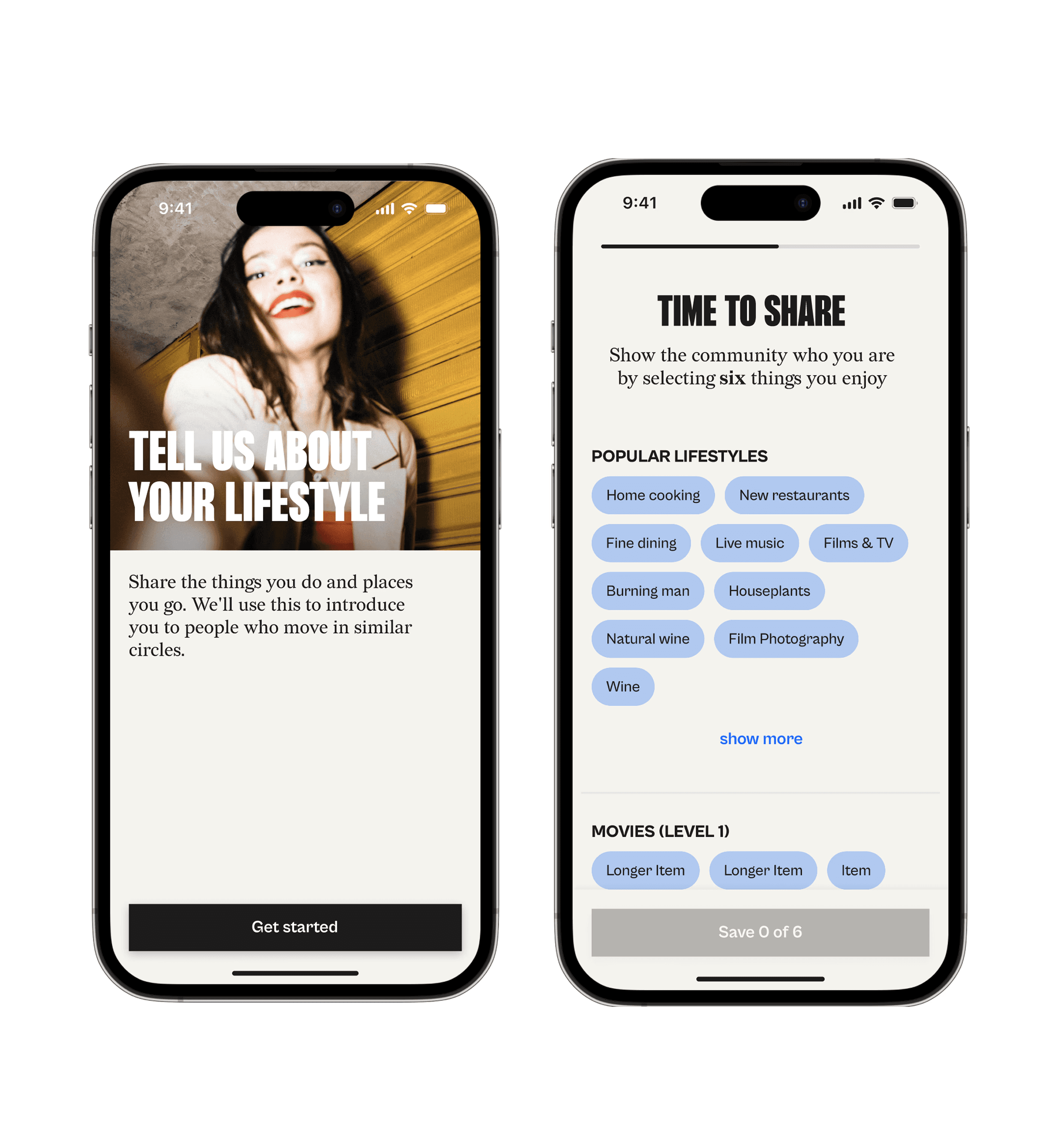
  • All new users required to add 5 lifestyles and 3 details during onboarding,

  • 40% of existing MAU adopted lifestyles,

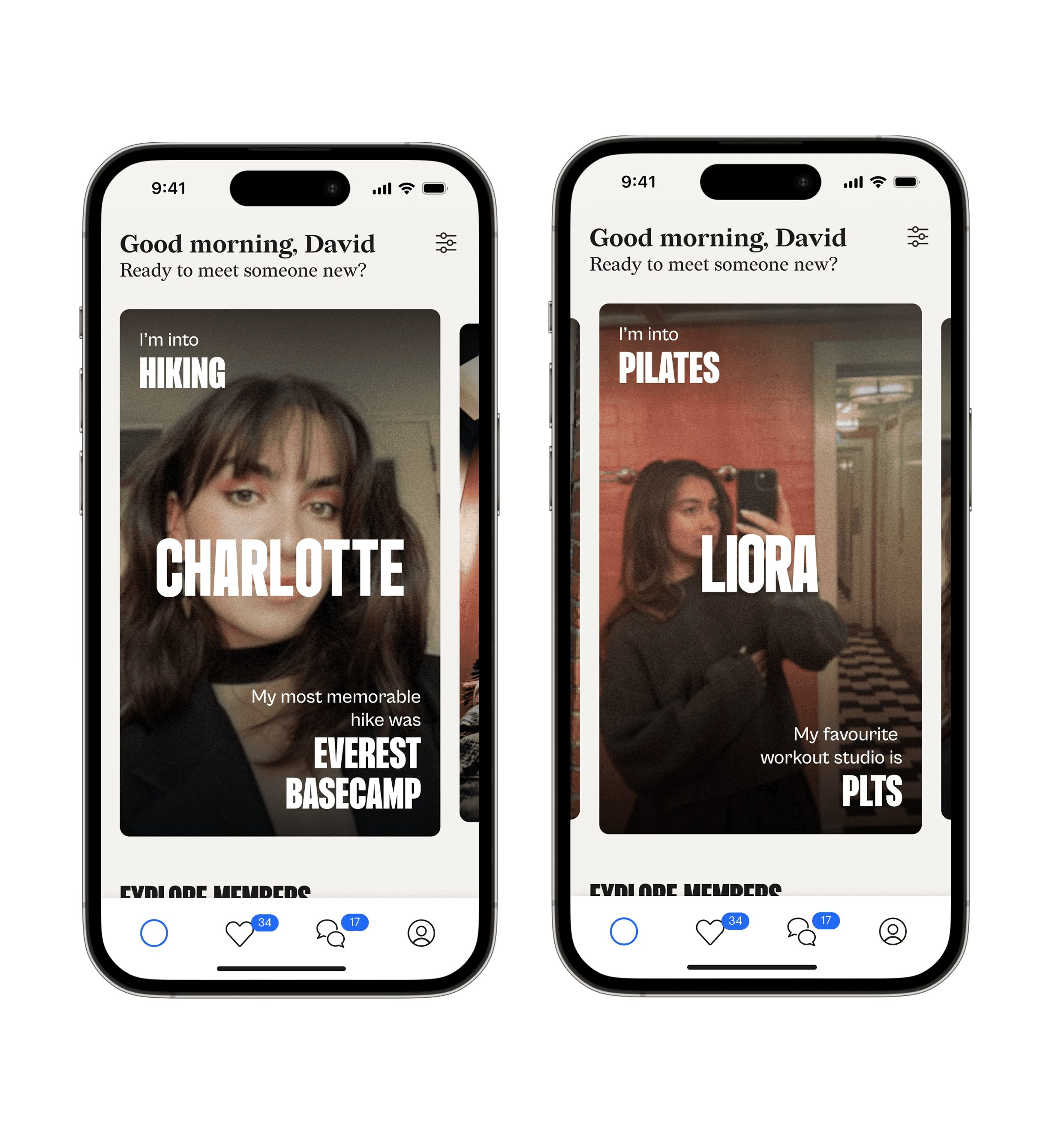
  • Profiles containing lifestyles showed increased activity (matches, likes, messages).

Despite the "circles" approach not resonating, the lifestyle framing opened up promising directions: recommendations based on shared lifestyles, enriched profiles with lifestyle content, and lifestyles as a "discovery" angle.

The sprint created alignment and directly shaped the 2024 roadmap: defined what lifestyles meant for users, and created direction for capturing lifestyles and connecting members

  • Enriched profiles with lifestyle content,

  • Laid the foundation for a the app rebrand,

  • Refined matchmaking algorithms using lifestyle as a filtering layer.

    Six months after launch:

  • All new users required to add 5 lifestyles and 3 details during onboarding,

  • 40% of existing MAU adopted lifestyles,

  • Profiles containing lifestyles showed increased activity (matches, likes, messages).

Lifestyles in registration
lifestyles in onboarding
lifestyles on profiles in homepage
lifestyles in profile

Above: Lifestyles in onboarding Below: New profile on "home page" (L) & V1 of Lifestyles in profiles (R)

Takeaway —

Testing beats assumptions. Instead of building what leadership envisioned, we tested it first and learned users wanted the outcome (lifestyle-based matching) but not the mechanism (forced communities).

The sprint gave us permission to test bold ideas quickly without committing months of development to the wrong solution. My role isn't just to design solutions; it's to facilitate the right conversations, frame the right questions, and help teams move from opinions to evidence-based decisions.

Testing beats assumptions. Instead of building what leadership envisioned, we tested it first and learned users wanted the outcome (lifestyle-based matching) but not the mechanism (forced communities).

The sprint gave us permission to test bold ideas quickly without committing months of development to the wrong solution. My role isn't just to design solutions; it's to facilitate the right conversations, frame the right questions, and help teams move from opinions to evidence-based decisions.